INTRAOSSEOUS SUTURE THREAD FIXATION DEVICE
Description
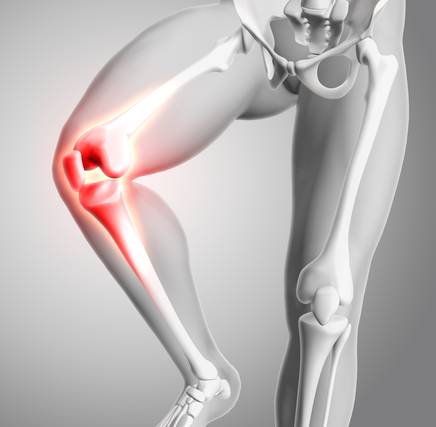
Sometimes, damage occurs to the meniscus root, requiring the anatomical position of the meniscus to be restored for the knee to function properly. There are essentially two techniques for this: in situ repair and transosseous repair. The advantages of transosseous repair over the in situ technique have been extensively documented. However, this type of repair requires the creation of a tunnel through part of the tibia to reach the meniscal root. To fix the meniscal root in position, once sutured, the thread must be passed through this tunnel. It has been found that the length of thread required to cover the entire tunnel is so great that it causes displacement of the meniscal root, preventing it from being fixed in the desired position and thus altering the biomechanical functioning of the joint and hindering subsequent healing. The present invention consists of a knotless device that solves the aforementioned problem, together with the tools for its surgical implantation. The device consists of a screw that has the particularity of being able to be fixed at the end of the tunnel closest to the root position, minimising the length of the thread. To this end, it has an elastic mechanism that not only allows the thread to be shortened, but also facilitates the measurement of the tension applied to it. Two devices are also included to perform the screw fixation manoeuvre in the tunnel.
Advantages
The advantages of the system are as follows:
• More anatomical and stable fixation: the screw is placed at the proximal end of the tunnel, reducing the length of the thread and preventing displacement of the meniscal root.
• Tension control: the mechanism allows the tension applied to the suture thread to be adjusted.
• Compatibility with the surgical procedure: the system is implanted using the same arthroscopic approaches and instruments used in the traditional transosseous technique, facilitating its clinical adoption.
• Reduced risk of functional failure: by minimising displacement due to suture relaxation, biomechanical stability is improved and tissue integration is promoted.
• Provision of surgical instruments: the invention includes the instruments required to place the knotless device with the appropriate tension and in the location selected by the surgeon, maintaining technical simplicity and without increasing the duration of the procedure.
Uses and Applications
The device is designed to improve meniscal root repair in arthroscopic surgery, allowing for more stable and controlled fixation of the meniscus in its anatomical position. Its ability to precisely shorten and tighten the suture thread makes it particularly useful in transosseous procedures, where the length of the tibial tunnel can compromise clinical outcomes.
This system is used in the field of traumatology and orthopaedic surgery, with particular relevance in sports injuries and meniscal preservation procedures. Its compatibility with current surgical techniques facilitates its adoption in hospitals, traumatology clinics and centres specialising in knee surgery.
The device fits perfectly into the markets for arthroscopic implants, meniscal repair devices and orthopaedic instruments, which are growing sectors where there is increasing demand for solutions that improve the stability, reproducibility and biomechanical effectiveness of meniscal repairs.
Keywords
Sectors
Areas
Applicants
UNIVERSIDAD DE MÁLAGA
Inventors
SALVADOR MORENO VEGAS, ALEJANDRO PEÑA TRABALON, FRANCISCO MANUEL GARCIA VACAS, ANA MARIA PEREZ DE LA BLANCA COBOS, MARIA BELEN ESTEBANEZ CAMPOS, MARIA PRADO NOVOA, ALEJANDRO ESPEJO BAENA, ALEJANDRO ESPEJO REINA
Filing Date
04/12/2025
Protection Level: National (Spain)
Processing Status: Spanish protection application in priority period